This is not a technical review, but rather a closer look at how modest, slower focal lengths can still render beautiful, character rich bokeh especially from Voigtlander, a brand that occasionally draws negative criticism in this department.
Ultra fast lenses remain the undisputed kings of isolation. An F1.0 or F1.2 prime doesn’t just blur a background, it dissolves it entirely, turning messy backgrounds and foregrounds into a seamless wash of color and soft shapes. It is a beautiful dramatic effect. Ot's the number 1 reason I love to shoot wide open whenever possible.
However, today, I left those classic, heavy primes at home. No Summiluxes, no ultra fast monsters. Instead, I carried a compact, modest lens known for it's incredible sharpness and contrast which rivals the Leica Apo 50mm Summicron. I'm talking the Voigtlander 50mm F2 Apo Lanthar. I also dug up some older photos I found that help me demonstrate the capabilities of the lenses used for this writeup.
On paper, an F2 lens shouldn't compete in the bokeh arena, it isn't designed to obliterate the world behind your subject. Yet, the apo design of this lens proves that aperture numbers alone don't tell the whole story.
The 50mm Apo Lanthar is no slouch. Where ultra fast glass chooses total obliteration, this F2 offers an elegant smooth transition. The background doesn't turn to mush, it steps back gracefully with a smooth, natural falloff that retains shape and context.
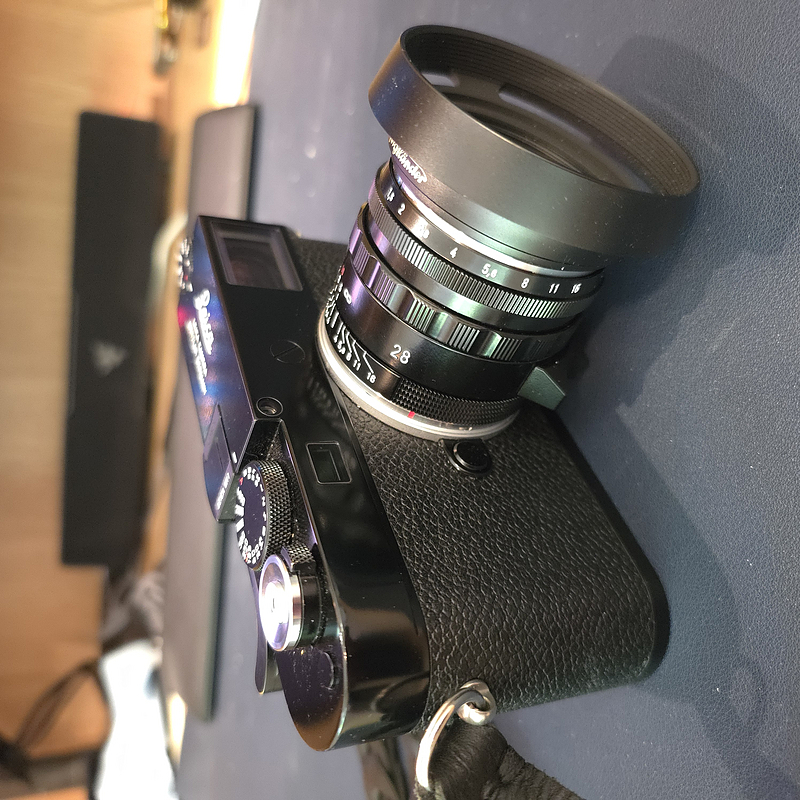
Shifting perspective, I swapped the 50mm for something wider, a focal length normally dismissed by many, including myself, the Voigtlander 28mm F1.5 Nokton Vintage Line (Type II). I have the glossy black version which just looks amazing on my glossy black M11.
Conventional wisdom says a wide angle 28mm is meant for deep depth of field, keeping everything from the foreground to the horizon in crisp focus. But this Nokton carries a secret weApon, its close focus capability which requires the use of the rear LCD or the optional Visoflex EVF. Who needs an EV1 when you can have a real rangefinder camera 😁
By pushing the lens to its minimum focusing distance, the inherent depth of the wide angle melts away. The F1.5 aperture, paired with that extreme proximity, unlocks a wonderful rendering that wraps around the critically sharp central subject. The background seems to compress and stretch creating a dynamic separation that I have not seen with other wide angle lenses/ Honestly, few wide angle lenses could ever hope to achieve this.
The fast lenses will always have their place when absolute light gathering and total isolation are required, but today belonged to a different kind of player. It was definitive proof that slower still can render very pleasing bokeh.
This image was shot wide open at f2 and focused using the rangefinder.
Looking at this image, it is clear why this 50mm lens punches 🥊above its weight class when shot wide open. Even at f2, the separation between the monstera leaves and the background is incredibly clean. The micro contrast and center sharpness on the main leaf are tack sharp, showing off every fine detail and vein in the plant structure without any noticeable bleeding or softness.
The out of focus rendering which is what this editorial is really all about is where the lens really shines. Instead of turning the background into a completely flat, muddy smear, it creates a very smooth, gradual transition into the background. The framed prints on the wall and the warm ambient light behind the plant melt away softly, but they still retain enough shape to give the image context and depth. There are no harsh edges or busy, nervous patterns in the blur that I can notice, just a clean, high contrast falloff that looks completely natural and easy on the eyes.
I love this lens. It is versatile and never disapoints.
This image was shot wide open at f2 and focused using live view.
Comparing this image to the first shot above, offers a great look at how rangefinder focusing stacks up against using live view on the M11.
The first image, dialed in purely through the rangefinder patch, hit the mark beautifully. But when I switched to portrait orientation and zoom in using live view for this image , the sensor based focus really shows. The edge to edge sharpness right on the central leaf's stem and main vein structure is dead on.
However, the real takeaway here is just how tight the tolerances are between the two shots. Looking closely at both files, the focus is essentially identical, which is a huge testament to how well calibrated this specific lens is to my M11's rangefinder.
Usually, on a high resolution camera, comparing an optical rangefinder to live view reveals a slight front or back focus due to tiny mechanical variances. But in this case, the rangefinder focus in the first image is spot on with the sensor based focus version. It tells me that I can trust my cameras rangefinder without needing to rely on the screen for critical sharpness, even when shooting wide open. 👍
Bringing it back to our main topic, once again, the bokeh from this f2 lens really shines. Even with the change in orientation and framing, the background falloff remains incredibly clean and smooth, proving that a slower lens can still deliver beautiful, high quality separation. But let's be realistic, an f1.0 or f1.2 lens will always create a level of total background melting that an f2 lens simply cannot touch.
You will see me use this specific subject a lot in my reviews. Usually, I like to shoot it in the evening when the streetlights come on, the harsh daylight is gone, and there is a completely different atmosphere at work. However, today during a weekend trip into Portland from where I live in the sticks, the sun was still out earlier in the day.
Even with the change in ambient light, the Voigtlander 50 Apo Lathar handles the scene beautifully wide open in this image. The tack sharpness on the painted ball and the fine details of the heart emblem are incredible, pulling the main subject completely forward. What is really impressive here is how pleasant the background bokeh remains. Given the distance between the subject and the patio seating behind it, a lot of lenses might produce busy or nervous edges around the people and highlights, but this f2 lens keeps the background rendering remarkably smooth and clean.
While this image of my trusty 4 legged model Freya does not have that completely melted, seamless wash that an f1 or f1.2 lens would produce, I find the bokeh here is still incredibly pleasant and handles a complicated scene well.
A Christmas tree filled with small lights is usually a brutal test for any lens, often creating busy, distracting "onion rings" or hard, nervous edges around the highlights. In this shot, the specular highlights behind Freya are rendered as clean, round discs. There is a slight outlining to the bokeh circles, which keeps the background from completely dissolving, but it gives the lights a nice structure that frames the subject beautifully without pulling your eye away from her expression.
The transition from the tack sharp details in her fur down to the soft texture of the blanket shows off a very natural, gradual falloff. It is a great example of a lens that delivers clean subject isolation and well behaved out of focus highlights, even when it isn't completely obliterating the background.
This 28mm 1.5 Voigtlander is really something. I much prefer it to the APO Lanthar for the close focus and bokeh. Obviously if I were shooting landscape or architecture, the APO Lanthar is the way to go. But for my style, [b]this is da bomb![/b]
Used the Visoflex 2 on the M11 for the close focus.
Switching to a wide angle lens like a 28mm usually means you are expecting everything from the foreground to the background to stay relatively sharp. But looking at this image, the Nokton 28mm f1.5 Type II completely flips that expectation on its head.
By taking advantage of the lens's close focus capabilities and getting right up into the plant, you get a dramatic sense of separation that you almost never see with a 28mm focal length. The foreground leaves in the lower right blur out heavily, while the central leaf stays crisp. Behind it, the room and the framed prints on the wall melt into a very smooth, pleasing blur. It creates a dynamic, layered look that gives the wide perspective an unexpected amount of depth, proving that close focus can turn a standard wide angle shot into something much more subject focused and isolated.
Looking at this version of the above, stripping away the color shifts the whole dynamic of the image.
In the color version, your eyes naturally wander between the different green tones of the leaves and the warm and cool colors in the background. In monochrome, all of that competing information is gone. The separation becomes purely about tonality and contrast.
Because the central monstera leaf has nice, mid-tone gray values with crisp micro contrast, it stands out sharply against the bright white walls and muted grays of the background frames. The out of focus areas melt away even more effectively because the blur isn't broken up by different color temperatures. The smooth tonal gradations in the background give the bokeh a cleaner, more deliberate feel, which absolutely accentuates the depth and makes the subject pop in a way color can't replicate.
The real magic in this image isn't soap bubbles or jittery artifacts it’s the smoothness of the falloff for an f/2prime lens. I can only imagine a 1.8 like the Zeiss 55 would be slightly even smoother.
When you look at the background on the left, there are no harsh, distracting hard edges or bright rings outlining the shapes. Instead, the lens renders a incredibly cream like, progressive transition. It melts away completely neutrally. Because I shot this at a close subject distance, I forced a lens that on paper shouldn't obliterate backgrounds to deliver a completely undistracting smooth drop off.
The highlight rendering on my daughters hair vs the background on the right shows zero busyness or nervous details. It’s just clean subject isolation that lets the focus stay entirely on her eyes and the texture of her hair.
I truly believe proximity allows these highly corrected, modern Voigtlander designs to give you a medium format like, buttery transition that completely defies their modest aperture size.
I don't know about you, but I alos think Voigtlander should sponsor me since I speak so highly of their lenses. 🤣
Looking closely here I can see exactly how color and highlights behave when you are shooting a close portrait frame.
The standout feature here is how the lens handles the background elements specifically the bright, lights in the upper right. Instead of turning into harsh, distracting shapes, the highlights melt into incredibly soft, round discs of color. Notice that the edges of the bokeh balls are smooth and diffused, there is no hard outlining or onion ring patterning. Overall, I am pleased with what I see.
Because of the tight framing and close proximity, the depth of field cuts off dramatically right behind my daughters face. Her curls on the left side of the frame transition rapidly but gracefully from critical sharpness into a soft blur.
I really believe this image demonstrates that you don't need a massive, heavy F1 or F2 lens to handle a complex indoor/outdoor background. Although I admit, I am a sucker for those fast primes. Especially the Nokton 1.0
Ultimately, chasing the fastest apertures is often a game of diminishing returns but lets face it, it is also somewhat satisfying holdingthat unique lens in your hands. The fast lenses will always have their place when absolute light gathering is a necessity, but this personal exploration belonged to a different kind of performance. As the above demonstrate, when you move past the obsession, a different kind of image reveals itself. By using thoughtful technique and close focus proximity, these slower focal lengths don't just blur the background, they shape it with character and an elegant transition to bring satisfaction to the photographer.
Use formatting shortcuts: [b]bold[/b], [i]italics[/i], [quote]quote[/quote], or [url=https://site.com]links[/url]. Paste a direct photo URL (.jpg, .png, .webp) or video link to embed it instantly.
Support LeicaImages.com — Our community is free for everyone. If you value what we do, you can help cover our server and development costs with a small one time or monthly donation.





The out of focus rendering which is what this editorial is really all about is where the lens really shines. Instead of turning the background into a completely flat, muddy smear, it creates a very smooth, gradual transition into the background. The framed prints on the wall and the warm ambient light behind the plant melt away softly, but they still retain enough shape to give the image context and depth. There are no harsh edges or busy, nervous patterns in the blur that I can notice, just a clean, high contrast falloff that looks completely natural and easy on the eyes.
I love this lens. It is versatile and never disapoints.
The first image, dialed in purely through the rangefinder patch, hit the mark beautifully. But when I switched to portrait orientation and zoom in using live view for this image , the sensor based focus really shows. The edge to edge sharpness right on the central leaf's stem and main vein structure is dead on.
However, the real takeaway here is just how tight the tolerances are between the two shots. Looking closely at both files, the focus is essentially identical, which is a huge testament to how well calibrated this specific lens is to my M11's rangefinder.
Usually, on a high resolution camera, comparing an optical rangefinder to live view reveals a slight front or back focus due to tiny mechanical variances. But in this case, the rangefinder focus in the first image is spot on with the sensor based focus version. It tells me that I can trust my cameras rangefinder without needing to rely on the screen for critical sharpness, even when shooting wide open. 👍
Bringing it back to our main topic, once again, the bokeh from this f2 lens really shines. Even with the change in orientation and framing, the background falloff remains incredibly clean and smooth, proving that a slower lens can still deliver beautiful, high quality separation. But let's be realistic, an f1.0 or f1.2 lens will always create a level of total background melting that an f2 lens simply cannot touch.
Even with the change in ambient light, the Voigtlander 50 Apo Lathar handles the scene beautifully wide open in this image. The tack sharpness on the painted ball and the fine details of the heart emblem are incredible, pulling the main subject completely forward. What is really impressive here is how pleasant the background bokeh remains. Given the distance between the subject and the patio seating behind it, a lot of lenses might produce busy or nervous edges around the people and highlights, but this f2 lens keeps the background rendering remarkably smooth and clean.
For comparison, this shot located here https://www.leicaimages.com/photo/2000262-Leica-photo shows you how the Zeiss 25mm Distagon 1.4 wide open renders the similar shot.
A Christmas tree filled with small lights is usually a brutal test for any lens, often creating busy, distracting "onion rings" or hard, nervous edges around the highlights. In this shot, the specular highlights behind Freya are rendered as clean, round discs. There is a slight outlining to the bokeh circles, which keeps the background from completely dissolving, but it gives the lights a nice structure that frames the subject beautifully without pulling your eye away from her expression.
The transition from the tack sharp details in her fur down to the soft texture of the blanket shows off a very natural, gradual falloff. It is a great example of a lens that delivers clean subject isolation and well behaved out of focus highlights, even when it isn't completely obliterating the background.
By taking advantage of the lens's close focus capabilities and getting right up into the plant, you get a dramatic sense of separation that you almost never see with a 28mm focal length. The foreground leaves in the lower right blur out heavily, while the central leaf stays crisp. Behind it, the room and the framed prints on the wall melt into a very smooth, pleasing blur. It creates a dynamic, layered look that gives the wide perspective an unexpected amount of depth, proving that close focus can turn a standard wide angle shot into something much more subject focused and isolated.
In the color version, your eyes naturally wander between the different green tones of the leaves and the warm and cool colors in the background. In monochrome, all of that competing information is gone. The separation becomes purely about tonality and contrast.
Because the central monstera leaf has nice, mid-tone gray values with crisp micro contrast, it stands out sharply against the bright white walls and muted grays of the background frames. The out of focus areas melt away even more effectively because the blur isn't broken up by different color temperatures. The smooth tonal gradations in the background give the bokeh a cleaner, more deliberate feel, which absolutely accentuates the depth and makes the subject pop in a way color can't replicate.
When you look at the background on the left, there are no harsh, distracting hard edges or bright rings outlining the shapes. Instead, the lens renders a incredibly cream like, progressive transition. It melts away completely neutrally. Because I shot this at a close subject distance, I forced a lens that on paper shouldn't obliterate backgrounds to deliver a completely undistracting smooth drop off.
The highlight rendering on my daughters hair vs the background on the right shows zero busyness or nervous details. It’s just clean subject isolation that lets the focus stay entirely on her eyes and the texture of her hair.
I truly believe proximity allows these highly corrected, modern Voigtlander designs to give you a medium format like, buttery transition that completely defies their modest aperture size.
I don't know about you, but I alos think Voigtlander should sponsor me since I speak so highly of their lenses. 🤣
The standout feature here is how the lens handles the background elements specifically the bright, lights in the upper right. Instead of turning into harsh, distracting shapes, the highlights melt into incredibly soft, round discs of color. Notice that the edges of the bokeh balls are smooth and diffused, there is no hard outlining or onion ring patterning. Overall, I am pleased with what I see.
Because of the tight framing and close proximity, the depth of field cuts off dramatically right behind my daughters face. Her curls on the left side of the frame transition rapidly but gracefully from critical sharpness into a soft blur.
I really believe this image demonstrates that you don't need a massive, heavy F1 or F2 lens to handle a complex indoor/outdoor background. Although I admit, I am a sucker for those fast primes. Especially the Nokton 1.0
Ultimately, chasing the fastest apertures is often a game of diminishing returns but lets face it, it is also somewhat satisfying holdingthat unique lens in your hands. The fast lenses will always have their place when absolute light gathering is a necessity, but this personal exploration belonged to a different kind of performance. As the above demonstrate, when you move past the obsession, a different kind of image reveals itself. By using thoughtful technique and close focus proximity, these slower focal lengths don't just blur the background, they shape it with character and an elegant transition to bring satisfaction to the photographer.