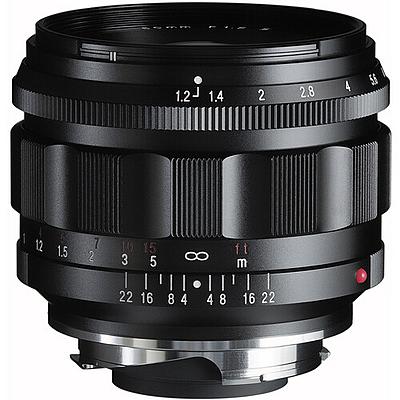
I published this a while ago on one of our sister site. But with so much leica and Voigtlander talk these days, It's only fair to publist it here.
My relationship with manual glass is a tug of war between nostalgia and performance. While I appreciate "vintage character," I generally demand clinical, razor sharp rendering. I have little patience for "glow" when it’s just an excuse for poor wide open performance.
When I picked up the Voigtlander 50mm f/1.2 Nokton II from
Cameraquest, I was skeptical. Generally speaking, fast primes including Leica often implies "soft until f/2.8." However, Voigtlander has a pretty solid record of delivering. So, after testing it on my Nikon Zf via the Techart TZM-02 autofocus adapter using my 13 year old German Shepherd, Freya, as a model I was genuinely impressed. The Voigtlander surpassed my expectations.
I am a stickler for contrast and resolution. Usually, f/1.2 glass carries a dreamy haze, but this Version II is a different animal:
Even at f/1.2, the sharpness is remarkable. It lacks the distracting spherical aberration of its predecessors.
Unlike many lenses that wash out wide open, this lens maintains rich blacks and deep tones even in challenging light.
Did I say auto focus ? Say hello to my litlle friend. Techart TZM-02
Adapting M mount glass to mirrorless often feels like a compromise, but the Techart TZM-02 changes everything. On the Nikon Zf, the experience is seamless. The adapter’s motor is snappy enough to make this beast of a lens feel like a native autofocus prime, even when utilizing eye tracking.
Comparing this to my 50mm f/2 APO Lanthar( THe benchmark ) the Nokton II holds its ground surprisingly well. That 12 blade diaphragm isn't just for show; it gives you three distinct renderings depending on where you click the ring.
At 1.2, the bokeh circles are perfectly round with no trace of the blades. It’s that classic melting background look.
At 1.4, you get a subtle sawtooth texture in the highlights. It’s not distracting, but it adds a bit of grit and character you won't find in a clinical lens.
At 2.0 is where things tighten up. The rendering becomes stable and consistent, moving toward that sharp, clinical look I personally prefer.
Voigtlander pulled off something impressive here. A lens that’s highly corrected but never feels sterile. It hits that sweet spot of high resolution bite at the focus point with a smooth a fall off. Honestly, on the
Zf sensor, these files have a sense of depth that my native S lenses often miss.


 Guest

 JT


