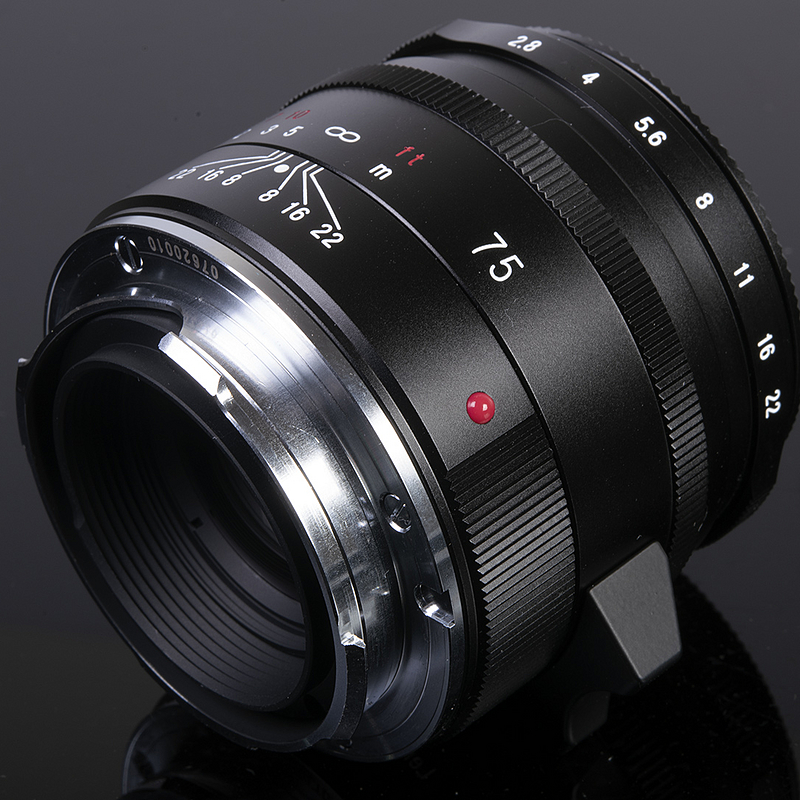
The King and the Usurper. Is the Leica 75mm APO Finally Dethroned? Enter the Voigtlander 75mm Apo Skopar

Author & Bio Jorge Torralba

Posted: 2026-07-10
Views: 683
Read what makes our reviews different than others

Back

For a long time, choosing a 75mm lens for a Leica M body meant making a definitive choice. If you wanted the absolute best optical performance possible at this focal length, you simply had to pack a larger, heavier lens and pay the premium for it. There wasn't a real pool of alternatives. However, things have changed!


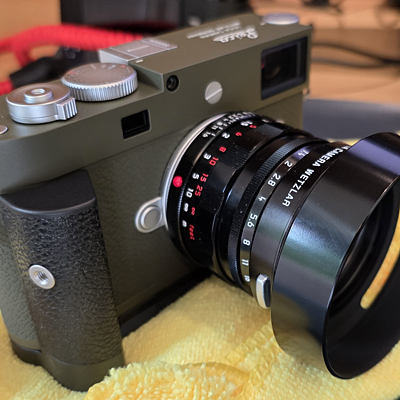
So, before you buy a Noctilux, a Voigtlander, or one of the newer Chinese made lenses, it is vital that we don’t forget the benchmark. We need to look past the marketing noise and talk about the undisputed baseline by which all others must be measured, my favorite and one and only Leica 75mm f/2 APO Summicron M ASPH.


Having said that, a new contender has arrived, and for the first time, the King is facing a true existential crisis. Enter the Voigtlander 75mm f/2.8 APO-Skopar.


Let me be perfectly clear. I absolutely stand by everything I wrote in my previous review of the Leica 75mm APO which you can find HERE. It is still an optical masterpiece, and everything I praised about its flawless rendering remains 100% true. But Voigtlander has been on an absolute tear, and this new APO-Skopar is a true game changer that is forcing me to completely rethink my entire outlook on this focal length. After reading Fred Miranda's highly regarded review, I had to put it to the real world shooting test. Now that I have shot them side by side, I am ready to make a bold claim. I am heavily leaning toward recommending the Voigtlander over the Leica legend.


It comes down to an unbeatable trifecta of size, price, and raw performance. The APO-Skopar changes the rules of rangefinder handling because it is insanely small, measuring just 44mm long and weighing a paltry 191 grams. It feels like a compact 50mm vintage prime, handling like an absolute dream on an M body while leaving your viewfinder completely unobstructed unlike the bulkier Summicron. At around $650 brand new, it is also a mere fraction of the cost of a used Leica APO. Yet optically, this little lens remains an absolute razor. Voigtlander didn't just slap the APO badge on the barrel for marketing; they thoroughly corrected it with four abnormal partial dispersion elements. Wide open at f/2.8, it delivers the absolute, staggering edge to edge sharpness and high micro contrast that directly mimics the drawing style of modern Leica glass.


The only remaining battleground is the aperture. The Leica Summicron gives you that extra stop at f/2. It creates a beautifully clean, lifelike 3D pop, isolating subjects with an understated, smooth background fall off.


The Voigtlander’s bokeh at f/2.8 is naturally more structured because you lose a full stop of background melting power. However, that f/2.8 aperture gives you a tiny bit more breathing room on a mechanical rangefinder patch, making it vastly more forgiving to focus quickly on the street compared to the razor thin, easily missed depth of field of the Leica at f/2 (where you practically need a Visoflex 2 for critical accuracy).


When a lens is this small, this sharp, and costs a fraction of the price, is that extra stop of f/2 bokeh really worth the massive premium and extra weight? This newcomer has made me question everything, and I’m starting to think it isn’t.


My travel bag used to be a locked in lockup consisting of an M11, the 50mm Summilux Classic re issue, and my trusted Zeiss 35mm Distagon. The 75mm Summicron used to be a permanent fixture, but the tiny Skopar has forced its way in.


But don't just take my word for it. The proof is in the rendering. Let’s look at the sample files below, where the real world performance of these two cross paths and you'll see exactly why the choice isn't as clear cut for the King anymore. The Targaryans have a real problem here! 


On a side note, Cameraquest now have these in stock. So if you want one, hurry before they are all gone.


Lastly, It is important to note that this isn't a technical review filled with charts, corner to corner crops, or photos of brick walls. I don't shoot test targets in a lab.  I shoot real life. This comparison is based entirely on how these lenses perform in actual everyday use, out on the street, capturing casual portraits, and shooting around the house. I wanted to see how they handle in the hand and how they render real world scenes, because that is what ultimately matters to me when a lens is on my camera.


I’ve also pulled together a companion gallery of additional photos captured with the SKOPAR. Consider this a raw look behind the curtain. it’s an unvetted collection that includes the good, the bad, and everything in between, shared simply for anyone who wants a deeper look at what the lens produces


https://www.leicaimages.com/album/1600057


View images from this article as a slideshow
Photo 50000200
Click to view photo detailsClick to view on Photo page & comment

SKOPAR


My Monstera subject again. Shot wide open at f/2.8, this image shows exactly why the APO Skopar is such a strong challenger. Notice the crisp contrast and biting sharpness right on the stem, along with a rich, warmth to the color that leans slightly toastier than Leica’s neutral rendering. This is also a perfect example of real world f/2.8 rendering. The background isn’t completely melted into  mush, you can still see the structure of the room but the transitions are clean, polite, and completely free of harsh edges. It isolates the subject by rendering the leaf with clear, 3D pop rather than just destroyng everything behind it.

Photo 50000047
Click to view photo detailsClick to view on Photo page & comment

SUMMICRON


Now look at this frame from the Leica 75mm APO Summicron, shot wide open at f/2. Seeing these two images side by side reveals the exact differences we're talking about.


First, the color signature is completely different. Where the Voigtlander renders with a distinct, warmth, the Leica stays firmly in its neutral territory. The greens are cooler, and the background lighting feels more color accurate and neutral rather than cozy.


Second, that extra full stop of light at f/2 changes the entire background dynamic. The the bookshelf, the frames, and the lamp melt away significantly more than they do at f/2.8. The isolation is deeper, smoother, and has that signature buttery fall off that gives the image its undeniable 3D rendering.


It perfectly frames my dilemma.  the Voigtlander gives me incredible sharpness and a beautifully warm palette in a tiny footprint, but the Leica shows its crown when it comes to smoothly dissolving the background and keeping colors perfectly neutral.

Photo 50000182
Click to view photo detailsClick to view on Photo page & comment

Ok, lets talk about sharp and focus. This one really highlights the precise focus capabilities of the Skopar. I did cheat and use the Visoflex here. But it is a shot at f2.8.


The focus is locked perfectly on the eye, rendering the eyelashes with incredible, individual sharpness. That crisp detail extends beautifully across the texture of the skin, the strands of hair near the face, and the pearl earring.


At the same time, the out of focus background drops away into a completely smooth, clean blur. There are no harsh edges or shapes behind the subject to compete for attention. I really think the black and white tones tie it all together, making the details pop against the soft background. 


Not too shabby for a 700.00 lens

Photo 50000189
Click to view photo detailsClick to view on Photo page & comment

SKOPAR


This image serves as a compelling demonstration of the APO Skopar, capturing this cluster of daisies by a picket fence. The lens delivers crisp sharpness and exceptional contrast on the central flower, rendering the fine detail of the petals and yellow core with great accuracy. There is a rapid and smooth transition from the tack sharp focus point into a beautifully soft background, providing awesome subject isolation. FYI, I processed all files with DXO Photolab.


The next image is a similar one I shot withthe Apo summicron

Photo 50000101
Click to view photo detailsClick to view on Photo page & comment

SUMMICRON


In direct comparison, this image highlights the distinctive rendering of the APO Summicron. While it matches the clinical sharpness of the previous shot on the central flower, the Summicron draws the overall scene with a different quality. Rather than completely melting the background away, it retains subtle definition in the patriotic bunting and the white picket fence, letting you clearly see the elements around the subject. The transition from the tack sharp focus point into the OOF areas is incredibly smooth, combined with a rich contrast that makes the white petals appear beautifully against the deeper tones of the background.


Photo 50000192
Click to view photo detailsClick to view on Photo page & comment

One more of the daisies. 

Photo 50000203
Click to view photo detailsClick to view on Photo page & comment

I think this  captures a great, energetic expression. Even with the focus slightly off, the lens demonstrates its strength through excellent subject separation, cleanly pushing the people in the background and the red umbrella into a smooth blur.  Granted, it's not an f2 blur but none the less, the separation is pretty good.The texture of the hair and the details of the jewelry still come through quite well, keeping the entire focus of the image right on the performers lively presence.

Photo 50000202
Click to view photo detailsClick to view on Photo page & comment

I was in Portland late this afternoon and I heard the pipes near Pionner Square. This street portrait captures a focused moment with a bagpiper right in front of the court house. The rendering handles the B&W tones beautifully, delivering sharp detail across the subject’s face, shirt texture, and the intricate parts of the bag pipes. The background of stone and grass is softly blurred, allowing the stone blocks to provide a clean pattern that keeps the emphasis entirely on the musician's expression.

Photo 50000201
Click to view photo detailsClick to view on Photo page & comment
Photo 50000193
Click to view photo detailsClick to view on Photo page & comment

This shot of my book case / media center shows a completely different side of what this baby can do. The Skopar handles the warm, glowing light from the lamp beautifully without any harsh flare or bleeding, keeping the exposure perfectly balanced across the wooden furniture and framed prints.


What makes this work is how the lens manages the deep layers of the room. The foreground leaves of my Monstera are pushed into a very soft, smooth blur that frames the scene, while the mid elementts like the titles on the book, the wooden bowl, and the textures of the lamp remain incredibly sharp and legible. It captures a cozy, detailed corner of my snug with a clean and natural perspective.


So far I am impressed.

Photo 50000194
Click to view photo detailsClick to view on Photo page & comment

Nothing special here. But, switching to black and white strips away the competing colors and forces me focus entirely on tones, shapes, and textures. I like the color version but always seem to have a preference for B&W.


The Skopar's micro contrast really shines through here, managing a wide dynamic range between the bright, glowing lamp and the deep shadows under the shelves without losing details in either. The OOF foreground leaves create a pleasant smooth, dark frame that leads the eye directly to the middle. Without color, the clean lines of the picture frames, the text on the book,  and the distinct gray tones of the pictures on the wall become much more pronounced.


Final thoughts


After testing both lenses across a variety of real world scenarios from detailed close up's of my indoor plants to candid street work and interior shots, the Voigtlander stands out as a highly competitive option. If your goal is a clinically sharp image with biting detail right from the focal plane, the compact Skopar is an exceptional recommendation.


On the other hand, the APO Summicron remains the choice for photographers who prefer a smoother, melting bokeh that isolates the subject while maintaining a clean, balanced background. Ultimately, these two lenses are incredibly close competitors, and the choice comes down to which rendering style best suits your personal workflow. One thing is certain,  the Summicron now has a truly viable contender.


For my style of photography, I still prefer the Summicron. But that isn't because it's the better lens overall; it simply comes down to the specific rendering you get from the f/2 aperture.


As noted above and repeated here, I’ve also pulled together a companion gallery of additional photos captured with the SKOPAR. Consider this a raw look behind the curtain. it’s an unvetted collection that includes the good, the bad, and everything in between, shared simply for anyone who wants a deeper look at what the lens produces


https://www.leicaimages.com/album/1600057


What do you think? Let me know in the comments below.

View images from this article as a slideshow

Join the conversation

Use formatting shortcuts: [b]bold[/b], [i]italics[/i], [quote]quote[/quote], or [url=https://site.com]links[/url].
Paste a direct photo URL (.jpg, .png, .webp) or video link to embed it instantly.
Post
Reset/Cancel
JT
07-10-26 21:57
friedeye wrote:

Impressive. I thought my lens buying days were over, JT. You might just have changed my mind.

Well, I hope I at least presented a compelling reason to look at the Skopar.
07-10-26 19:24
Impressive. I thought my lens buying days were over, JT. You might just have changed my mind.
Guest
07-10-26 13:41
You absolutely need to test Sirui Aurora 85 - 1,4 . . . !

All the best,
Odd Geir
07-10-26 02:40
Nice alternative to the 75 Cron at a fraction of the cost.Thanks JT.
Hide conversation
Get your store banner on LeicaImages.com
Send us an email to support@leicaimages.com


Support LeicaImages.com — Our community is free for everyone. If you value what we do, you can help cover our server and development costs with a small one time or monthly donation.

Log in to hide ads