The Leica Curse: Why I Choose the Friction of the Craft Over Digital Perfection

Author & Bio Jorge Torralba

Posted: 2026-06-19
Views: 360
Read what makes our reviews different than others

Back

Digital photography with autofocus is undeniably awesome. It’s an engineering marvel that delivers clinical precision, near perfect results, and an incredibly high hit rate. If you want a tack sharp image of a moving subject, modern mirrorless systems will nail it almost every single time.


But it introduces a quiet crisis of soul.


When autofocus becomes that flawless, the act of taking a picture changes. The camera does the thinking for you, reducing you from a creator to a mere composition checker. At a certain point, shooting with an autofocus mirrorless camera starts to feel less like a craft and more like operating an advanced appliance. You might as well just pull an iPhone or android out of your pocket, tap the screen, and let the algorithms do the rest. The results are there, but the feeling is gone. Totally void of any real enjoyment, I am left disappointed.


I accept that the working professional relying on this craft for a living really has no choice. They need the certainty, the speed, and the flawless delivery to pay the bills. But as an enthusiast, and former photographer, the curse is real.


This is where the ghost of film enters the equation. Back before the digital age, I managed to get solid focus on film without computers tracking human eyes in real time. More importantly, film was forgiving. The nature of film grain, combined with lower resolution ( Not that we even used these twowords back then when judging pictures ), meant that if my manual focus was a hair off, the image i just took still retained its beauty. Sometimes, that slight softness even added to the mood that today we call character when using an imperfect lens.


Enter the modern Leica Digital M, and with it, the birth of The Leica Curse.


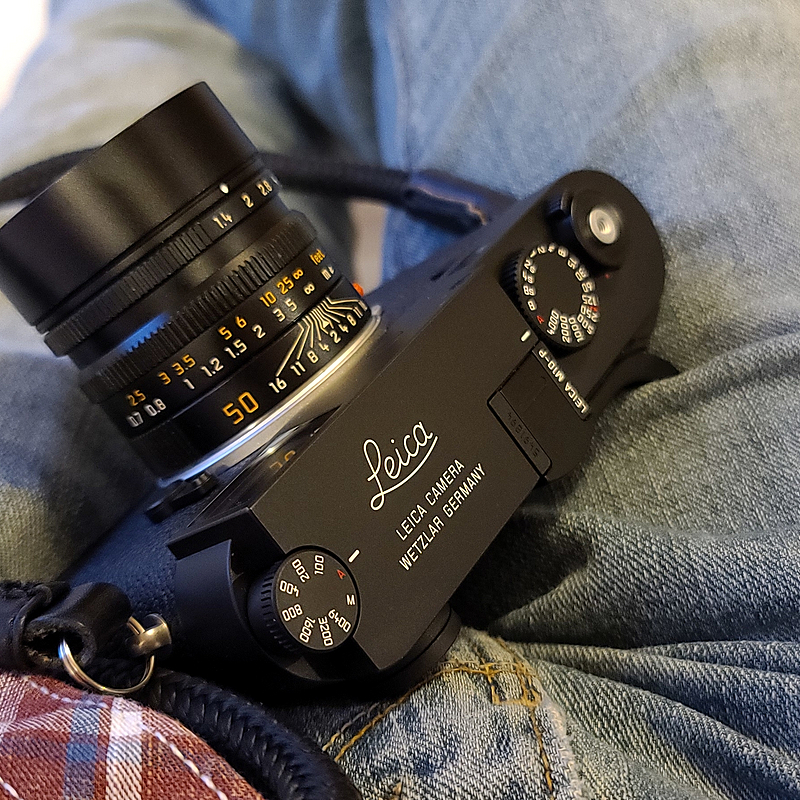
The Digital M creates a fascinating, frustrating hybrid problem, an uncompromisingly high resolution 60MP digital sensor paired with a purely analog, manual rangefinder mechanism. This is why I love it so much. It's a quasi real camera.


Digital sensors are brutal. Unlike film, a high megapixel digital sensor has zero forgiveness. It doesn't blend a near miss into soft grain. It highlights every fraction of a millimeter you missed with clinical, digital starkness. We sit at our computers pixel peeping at 100 percent zoom, letting a clinical monitor judge a shot born from pure intuition.


And so, I am now caught in a brilliant, maddening paradox.


The AF Mirrorless Route with my ZF gives me guarantee of results, but I forfeit the joy. The camera takes the soul right out of my shooting experience.


The Leica M Route with my M11 lets me recapture the absolute pinnacle of photographic pleasure. The mechanical resistance of the focus ring, the deliberate alignment of the rangefinder patch, the weight of a real camera around my neck, it makes me feel alive. It makes it photography.


But unless I am stopping down and relying entirely on zone focusing, every single shot at a wide aperture is a high stakes gamble. I trade the clinical certainty of autofocus for a beautiful, stressful roll of the dice.


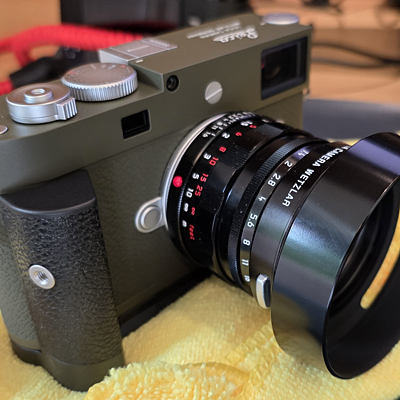
I believe Leica knows this tension exists. They even built the new Leica M EV1 to try and bridge that exact gap by swapping out the optical rangefinder for a built in electronic viewfinder. In my opinion it completely fails the spirit of the system by turning the M into just another digital screen experience, but the jury is still out and I have yet not tried it myself.


Of course, the ultimate irony is that the cure for the curse sits right on my shelf. With my M glass, I can pivot entirely and pick up my Leica MP. With the MP, I get the 100 percent experience all together. No sensor to judge me, no digital safety net. Just me calculating the exposures, winding the film, and trusting the mechanical harmony of the craft. It is pure photography, completely decoupled from the demands of modern digital perfection.


Yet, I still reach for the digital M too. This leads me to the core of the curse. Which in my case is a question of identity. Am I a photographer who demands the guaranteed, flawless capture? Or am I a photographer who demands the romance, the connection, and the tactile struggle of the art of photography? I think the latter.


Loving my M means accepting the heartbreak of the near miss. It means looking at an image that has perfect composition, perfect light, and perfect emotional resonance, only to realize the focus plane is resting two inches behind the subject's eyes.


Yet, day after day, I loop that strap around my neck. Because when I do nail it, when the rangefinder aligns perfectly, the digital sensor cooperates, and my own muscle memory triumphs over the machine. The reward is unmatched. It’s a victory autofocus nor a computer with a lens attached to it can never give me.


So the curse remains, heavy and beautiful. I willingly accept the flawed digital reality just to keep the soul and real pleasure of photography alive.

View images from this article as a slideshow
Photo 306846
Click to view photo details and comments

Shot with my MP, this frame is soft from edge to edge, yet it is completely acceptable to me, if not entirely preferred. Think about this. In a modern digital workflow, a computer would demand clinical sharpness somewhere in the frame. Here, nothing is critically sharp. The film's gentle rendering and lack of digital starkness allow the softness to become a narrative rather than a technical failure due to my inability to nail the focus. The motion blur of the waiter and the soft focus on the woman tell a story of a fleeting, real world moment. I believe it possesses an aura that perfection simply cannot replicate.

Photo 357695
Click to view photo details and comments

Shot on the M Monochrom, this image demonstrates the brutal reality of the digital curse. For me, the moment is incredible. The man's expression, the dog looking up but the digital sensor has no mercy for a near miss. Look closely and you can see my focus plane fell a few inches short, locking with sharp precision onto the brim of his cap and the tip of the dog's nose, leaving his eyes soft. Unlike film, which blends a miss into character, a high resolution digital sensor highlights the mistake with clinical starkness. It is a heartbreaking reminder of the gamble we take every time we rely on the rangefinder patch instead of autofocus.

Photo 545120
Click to view photo details and comments

Mounting my M glass onto a modern Sony body with an adapter. This setup achieves exactly what Leica is trying to do with the new M EV1, using an electronic viewfinder to perfectly nail manual focus but the Sony does it at a fraction of the price with better focus assist.

Photo 50000052
Click to view photo details and comments

This one was shot on my M11, this street scene is a little more acceptable because the focus is not too far off, but it is still telling. The digital sensor demands absolute perfection, revealing that while the overall moment and composition work, the critical plane of focus just missed the eyes of girls walking towards me. A modern digital camera with AF would have nailed this spot on an redered a much better capture.

Photo 2000293
Click to view photo details and comments

Another m11 capture, this time pushing the limits with the 75mm f2 APO Summicron, a notoriously difficult lens to focus manually wide open. My intended focus point was the girl in the middle, but the razor thin depth of field coupled with sudden movement shifted the plane slightly. It perfectly illustrates the curse.  A joyful, energetic moment where the digital sensor reveals exactly how close, yet how punishingly far, a manual near miss can be.


Photo 50000081
Click to view photo details and comments

To understand why I feel this way today, I have to look back at an image I shot back in the 1980s with a Nikon F2 and a 50mm f1.4 AIS lens. It was a 100 percent manual experience. I loved this image so much that I have a print of it hanging on my wall to this day.


The film grain and the specific color palette simply do something a digital camera cannot replicate here. Most importantly, the fact that the image is not 100 percent sharp due to the older lens design and the characteristics of film takes absolutely nothing away from the shot. It enhances it. It anchors the memory of this sweeping cityscape of Paris in a specific time and texture, completely separate from the clinical demands of modern digital perfection.


So, this leaves me with the practical reality of packing a bag. When it comes time to travel, I am deeply torn on what to take. My mind tells me to grab the certainty ofthe mirrorless auto focus systems, but my heart pushes back. Despite the gamble, despite the heartbreak of the near miss, I find myself reaching for my M11 more than anything else these days. I choose the friction. I choose the struggle. I choose the connection. So, I suppose you could say I am cursed, happily, beautifully cursed.

View images from this article as a slideshow

Join the conversation

Use formatting shortcuts: [b]bold[/b], [i]italics[/i], [quote]quote[/quote], or [url=https://site.com]links[/url].
Paste a direct photo URL (.jpg, .png, .webp) or video link to embed it instantly.
Post
Reset/Cancel
Guest
06-23-26 08:18
I don't understand the obsession with focus on the eyes when you get the picture of the two girls at a distance. If you wanted the eyes why didn't you wait until they got closer. I think you got a good image of two great ladies! JMO.
06-20-26 12:49
My reply I feel relates indirectly to this conversation. Back in the day, just before the Sony AF domination hit the industry, I shot with the Canon 1dsIII. In addition to commercial jobs, was shooting weddings as well and added the M9 and eventually the M240. My fave lens was the 35 1.4. I got pretty good hitting focus when shooting wide open and focus tracking movement. But, I will always remember the challenges to shoot a rangefinder wide open, especially during the challenges of wedding activity. I had to concentrate so hard, my head hurt. And when I missed a shot due to focus, the duress on my system made my head hurt even more. That said, I enjoyed the Leica experience much more than my Canon experience for those types of scenarios!
06-20-26 00:41
I agree entirely Jorge, I still use other manually focussing film cameras besides the Leica Ms and Rs. I feel that the digital Ms do give you that feel of 'taking ad making pictures' but you have to be spot on. I often 'cheat' by closing down to f4 and sacrificing some subject separation. I've often wondered about this preference and put it down to my age and how I learned to take photographs from the late 1960s onwards.
Hide conversation
Get your store banner on LeicaImages.com
Send us an email to support@leicaimages.com


Support LeicaImages.com — Our community is free for everyone. If you value what we do, you can help cover our server and development costs with a small one time or monthly donation.

Log in to hide ads